
Research Peptide Blends in Canada: Comparing BPC-157, TB-500, CJC-1295 & More
- Amino Pure Canada
- Feb 25
- 4 min read

As laboratory research into peptide science continues to expand, Canadian researchers are increasingly studying multi-peptide blends to examine interactions between complementary biochemical pathways. Rather than analyzing each compound in isolation, these combinations allow controlled laboratory models to explore coordinated cellular behaviour, signalling responses, and receptor activity in greater depth.
In Canada, research peptides such as BPC-157 + TB-500 blends, CJC-1295 + Ipamorelin, Glow, and Klow are commonly evaluated in preclinical and in vitro environments to assess structural stability, receptor binding behaviour, and biochemical pathway activity. Below is a technical overview of widely studied peptide blends used in controlled laboratory research settings throughout Canada.


BPC-157 + TB-500 (Thymosin Beta-4 Fragment)
BPC-157 is a pentadecapeptide derived from a protective gastric protein sequence. In laboratory research, it is frequently examined for its interaction with angiogenic pathways, nitric oxide signalling, and inflammatory markers in preclinical models.
TB-500 is a synthetic peptide modelled after a fragment of Thymosin Beta-4, a naturally occurring protein associated with actin regulation and cellular migration.
When studied together in controlled research environments, BPC-157 and TB-500 are often evaluated for:
Cytoskeletal organization
Cellular migration patterns
Tissue remodelling behaviour
Inflammatory pathway modulation
In Canadian laboratory research contexts, this blend is commonly examined for potential complementary effects related to actin regulation and extracellular matrix signalling. Researchers typically measure biomarker expression, cellular outgrowth, and structural stabilization within experimental frameworks.
CJC-1295 + Ipamorelin
CJC-1295 is a modified growth hormone–releasing hormone (GHRH) analog structured to extend half-life through DAC technology (depending on the version studied).
Ipamorelin is a selective growth hormone secretagogue receptor (GHSR) agonist, often examined for receptor specificity and minimized endocrine cross-interaction. In research environments, pairing CJC-1295 with Ipamorelin allows scientists to evaluate dual receptor pathway activation:
GHRH receptor stimulation
Ghrelin receptor signalling
Pulsatile GH release patterns
IGF-1 fluctuations in controlled studies
Within Canadian peptide research models, this combination is frequently analyzed to observe endocrine signalling patterns while maintaining structured laboratory oversight.
Glow Blend
“Glow Blend” formulations vary depending on manufacturer composition but typically combine peptides associated with skin-related cellular pathways.

In laboratory research settings, these blends are often evaluated for:
• Fibroblast activity
• Collagen-related marker expression
• Extracellular matrix signalling
• Oxidative stress biomarkers
Because Glow Blend represents a formulation category rather than a single defined peptide, research applications depend on the specific sequences included. Canadian researchers typically conduct in vitro assays, receptor binding evaluations, and biomarker analysis when studying such combinations.
Klow Blend
Klow Blend refers to multi-peptide research formulations often oriented toward metabolic or regulatory signalling pathways. While exact compositions vary, laboratory investigations typically focus on:
Peptide stability
Receptor affinity
Neural signalling markers
Comparative biochemical pathway interaction
As with other peptide blends in Canada, purity verification and batch testing remain critical factors for laboratory evaluation.
Selank + Semax Blend
Selank is a synthetic heptapeptide analog of tuftsin frequently studied for its interaction with immune-modulating and GABAergic pathways.
Semax is derived from ACTH(4-10) and commonly evaluated in research settings for its interaction with neurotrophic factors and cognitive-associated biochemical markers.
When studied together, researchers often examine:
• Stress-response pathway behaviour
• Synaptic plasticity indicators
• Neurotrophic factor expression
• Memory-associated biomarkers in preclinical models
Within Canadian laboratory research, this blend is evaluated under structured experimental parameters focused on receptor activity and neurochemical signalling.
HPLC Testing and Purity Standards for Research Peptides in Canada
For laboratories studying peptide blends in Canada, analytical testing standards are a central consideration. High-performance liquid chromatography (HPLC) is commonly used to verify peptide purity, structural integrity, and concentration consistency.
Researchers evaluating peptides in Canada often prioritize:
≥99% purity benchmarks
Controlled storage conditions
Batch traceability
Buying Research Peptides in Canada: Key Considerations
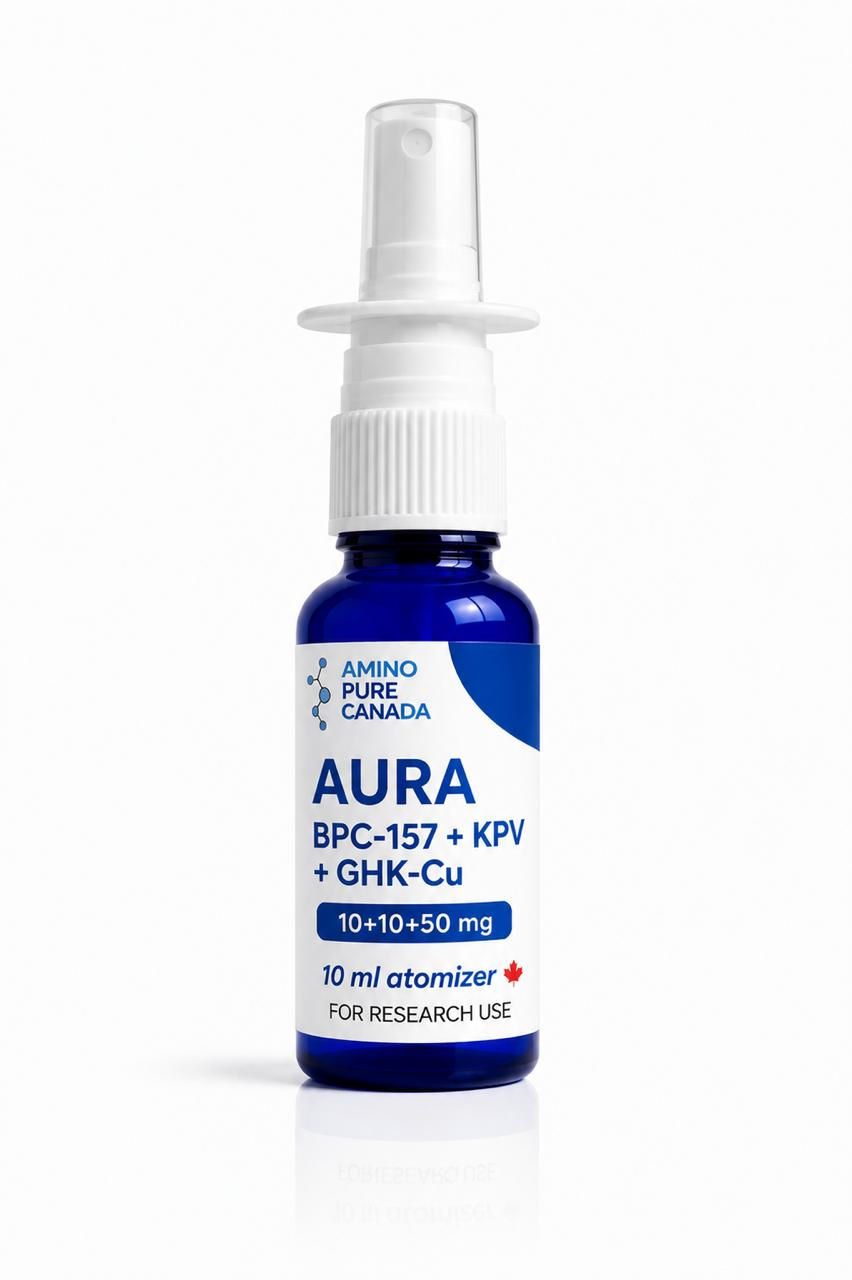
At Amino Pure Canada, we provide access to premium research peptides in Canada, including blends such as BPC-157 + TB-500 and CJC-1295 + Ipamorelin, alongside capsule and atomizer research formats. All products are HPLC-tested and supported by purity documentation to assist researchers conducting structured laboratory investigations.
When sourcing research peptides in Canada, laboratories typically assess:
• Analytical verification documentation
• Format suitability (capsules, vials, atomizers)
• Stability and storage requirements
• Transparent ingredient disclosure
Frequently Asked Questions About Research Peptides in Canada
Where can researchers buy peptides in Canada?
Laboratories typically source peptides from suppliers that provide HPLC verification and batch documentation for research use.
What is BPC-157 studied for in laboratory research?
In preclinical models, BPC-157 is commonly examined for its interaction with vascular, inflammatory, and nitric oxide signalling pathways.
What does HPLC-tested mean for research peptides?
HPLC testing verifies peptide purity and helps confirm compound concentration and structural integrity.
Are peptide blends legal for research in Canada?
Research peptides are generally supplied for laboratory and experimental use only, in accordance with applicable regulatory frameworks.
Why Buy Peptides from Amino Pure Canada
We provide secure and reliable shipping across Canada, supporting research facilities in Ontario, Alberta, British Columbia, Quebec, and throughout the country.
Final Thoughts on Peptide Blend Research in Canada
As peptide science continues to advance, multi-peptide blends offer researchers expanded opportunities to study cellular signalling interactions and pathway behaviour in controlled laboratory environments. From BPC-157 research in Canada to advanced endocrine and neuromodulatory peptide combinations, structured analytical standards and purity verification remain essential components of responsible research sourcing.
About the Author
This article was prepared by the research team at Amino Pure Canada, a Canadian supplier of HPLC-tested research peptides. Our team focuses on peptide purity standards, laboratory sourcing transparency, and structured analytical documentation to support controlled research environments across Canada.

Comments