
Research-Grade Peptides in Canada: Regulations, Quality, and Format Guide

Learn how Health Canada regulates in Canada, what “research-grade” really means, how to identify premium HPLC-tested peptides, and how different peptide formats compare.
Introduction: Understanding Peptides in the Canadian Market
Peptides are widely used in biochemistry, pharmacology, and laboratory research, but in Canada, their sale and marketing are tightly influenced by regulatory frameworks.
A key misconception in the industry is that the label “research-grade peptide” implies approval or oversight. In reality, the Canadian regulatory system focuses on product classification, intended use, and claims, not marketing terminology.
Regulatory Environment: What Health Canada Actually Requires
What “Research-Grade Peptides” Means
The term research-grade is not recognized as a formal regulatory category by Health Canada.
Instead:
It generally indicates intended use for laboratory research only
It does NOT confirm safety, efficacy, or regulatory approval
It does NOT replace requirements such as:
Drug Identification Number (DIN)
Notice of Compliance (NOC)
“Research-grade” = intended use, not authorization.
Key Restrictions You Must Understand
1) Authorization Requirement
Many peptides—especially injectables—are classified as drugs
Drugs require Health Canada authorization before sale
2) “Research Use Only” Has Limits
· This label does not exempt a product from regulation
If marketed for human use → it may be treated as an unauthorized drug
3) Strict Advertising Rules
Only authorized health products can be advertised with:
performance claims
recovery or wellness benefits
Research-Grade vs Other Peptides: What’s the Real Difference?
Category | Regulatory Status | Key Characteristics |
Authorized peptides | Approved by Health Canada | DIN/NOC, validated safety & quality |
Research-grade peptides | Not formally regulated category | Intended for lab research, no approval implied |
The difference is not just labeling — it’s regulatory validation + intended use + claims.
What Defines Premium Quality Peptides?
Premium quality peptides are differentiated by scientific rigor, not marketing.
According to standards from United States Pharmacopeia and guidance from U.S. Food and Drug Administration, high-quality peptides typically include:
Verified identity confirmation
High purity levels
Detailed impurity profiling
Batch-level traceability
Controlled manufacturing processes
Transparent Certificates of Analysis (COAs)
True quality = data-backed, reproducible, and transparent
Why HPLC-Tested Peptides Matter
HPLC (High-Performance Liquid Chromatography) is a gold-standard analytical method used in peptide science.
What HPLC Confirms:
Purity percentage
Separation of impurities
Batch consistency
Research published by institutions and journals such as those affiliated with American Chemical Society shows HPLC is widely used in peptide quality control.
But Important:
HPLC alone is not enough.
Premium peptide analysis often includes:
Mass spectrometry (LC-MS)
Sequence verification
Impurity characterization
Key takeaway:
HPLC-tested peptides are superior to untested products—but premium quality requires more than just one test.
Peptide Formats: Effectiveness, Quality & Scientific Considerations
Peptides are available in multiple formats, each with different strengths depending on research applications.
1) Lyophilized (Freeze-Dried) Peptides
Key Advantages:
Improved stability and shelf life
Easier storage and transport
Widely used in research environments
Considerations:
Requires proper reconstitution
Quality depends on synthesis + drying process
2) Liquid Peptides
Advantages:
Ready-to-use convenience
Uniform concentration
Limitations:
Lower stability vs lyophilized
Sensitive to storage conditions
3) Injectable Peptides (Research Context)
Scientific Insight:
High bioavailability
Direct systemic delivery
Regulatory Reality (Canada):
Most strictly regulated format
Often classified as prescription drugs
4) Oral Peptide Capsules
Advantages:
Non-invasive
High user convenience
Challenges (per major journals like Nature):
Degradation in digestive system
Lower absorption
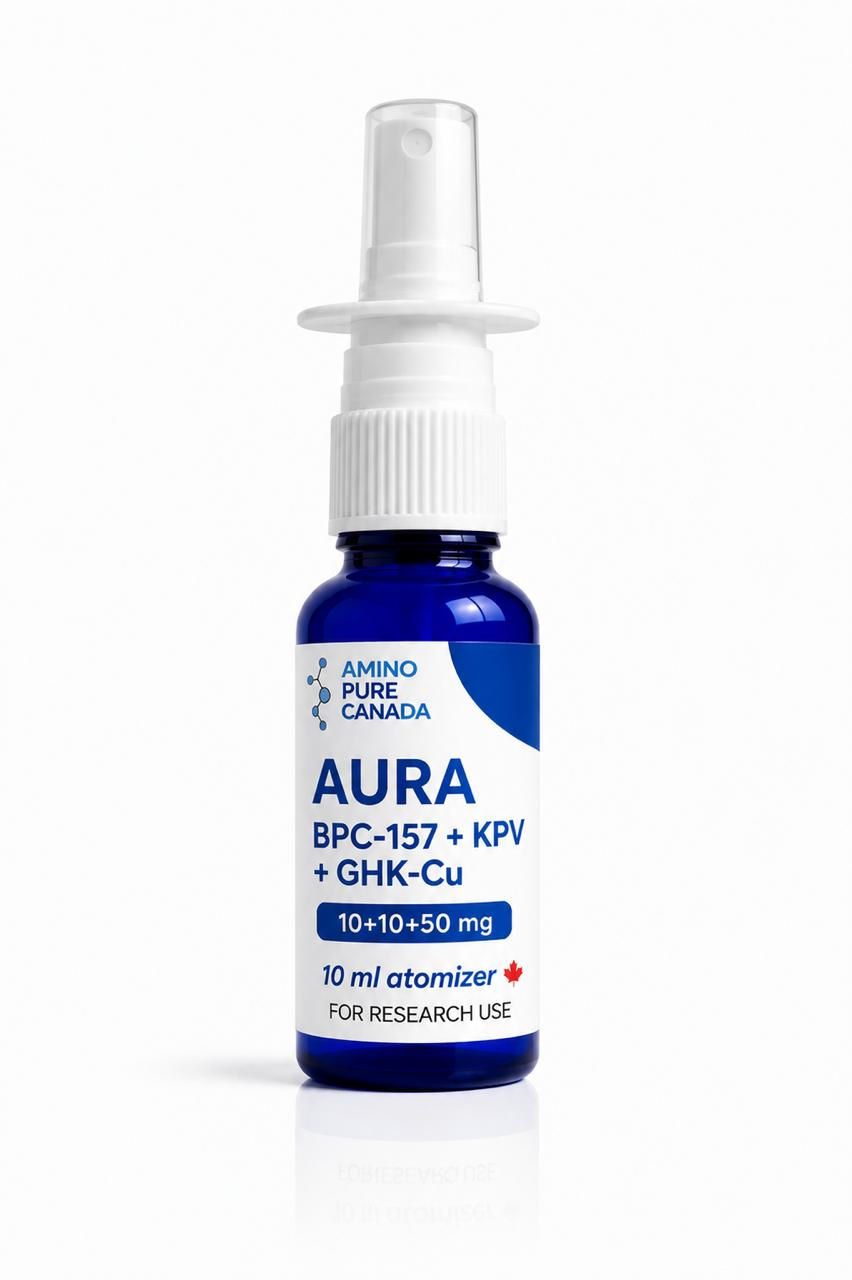
5) Nasal Peptide Sprays
Advantages:
Non-invasive delivery
Rapid absorption potential
Limitations:
Variable absorption
Highly formulation-dependent
Which Peptide Format Is Best?
There is no universally superior format.
According to leading research from journals like Nature Publishing Group:
Effectiveness depends on:
peptide structure
delivery method
formulation science
Injectable formats often provide higher bioavailability
Oral and nasal formats require advanced formulation strategies
The best format = context-dependent, not marketing-dependent
Final Takeaways
“Research-grade peptide” is not a Health Canada approval status
Compliance depends on:
product classification
claims made
regulatory authorization
Premium peptides are defined by:
analytical validation (HPLC + more)
purity + impurity control
transparent COAs
Format matters—but quality and science matter more
Peptide Quality Standards: What Defines High-Purity Peptides
Meta Title: High Purity Peptides in Canada: Quality Standards Explained
Meta Description: Learn what defines premium, high-purity peptides in Canada, including identity testing, impurity control, and lab validation standards.
What Does “High-Purity Peptides” Actually Mean?
In peptide science, purity is only one component of quality. A peptide labeled “99% purity” may still contain structurally similar impurities that affect research outcomes.
Organizations like United States Pharmacopeia emphasize that peptide quality must include:
Identity confirmation
Impurity profiling
Batch reproducibility
True quality is multi-dimensional, not just a percentage.
Key Quality Indicators
1. Identity Confirmation
Ensures the peptide sequence is correct
→ Typically verified via LC-MS or similar techniques
2. Purity Percentage
Measured via analytical techniques like HPLC
→ Indicates proportion of desired compound
3. Impurity Profiling
Critical but often overlooked
→ Includes truncated peptides, synthesis byproducts
4. Batch Consistency
Reliable suppliers provide batch-specific data, not generic reports
Why Quality Matters in Research
Low-quality peptides can:
Skew experimental results
Reduce reproducibility
Introduce unknown variables
For research integrity, quality control is non-negotiable
Internal Links
→ See: HPLC vs LC-MS Testing Explained
→ See: How to Read a Peptide COA
HPLC vs LC-MS: How Peptide Purity Is Verified
Meta Title: HPLC vs LC-MS for Peptides: What’s the Difference?
Meta Description: Understand how HPLC and LC-MS testing validate peptide purity, identity, and quality in research-grade peptides.
What Is HPLC?
High-Performance Liquid Chromatography (HPLC) separates compounds to determine purity.
Used widely in:
Pharmaceutical labs
Academic research
Supported by organizations like American Chemical Society
What Is LC-MS?
Liquid Chromatography–Mass Spectrometry combines:
Separation (LC)
Molecular identification (MS)
:
Molecular weight confirmation
Sequence validation
Key difference
Feature | HPLC | LC-MS |
Purity measurement | ||
Identity confirmation | ||
Impurity detection | Partial | Advanced |
Why Premium Peptides Use Both
According to U.S. Food and Drug Administration, peptide analysis should include:
Impurity control
Identity verification
HPLC alone = incomplete
HPLC + LC-MS = high confidence
Internal Links
→ See: Peptide Quality Standards
→ See: How to Read a COA
How to Read a Peptide COA (Certificate of Analysis)
Meta Title: How to Read a Peptide COA: Complete Guide
Meta Description: Learn how to interpret peptide COAs, including purity, chromatograms, and batch testing.
What Is a COA?
A Certificate of Analysis verifies:
Purity
Identity
Batch-specific testing
Key Sections Explained
1. Purity %
→ Derived from HPLC
2. Chromatogram
Graph showing:
Peaks = compounds
Main peak = target peptide
3. Retention Time
Indicates consistency across batches
4. Batch Number
Critical for traceability
Red Flags in COAs
No chromatogram
Generic (non-batch-specific) reports
Missing testing methods
Reliable suppliers provide transparent, verifiable COAs
Peptide Formats Explained: Capsules vs Sprays vs Lyophilized
Meta Title: Peptide Formats Compared: Capsules, Sprays, Lyophilized
Meta Description: Compare peptide formats including capsules, nasal sprays, and lyophilized peptides based on stability and research use.
Why Format Matters
Peptides are sensitive molecules. Delivery format impacts:
Stability
Absorption
usability in research
Research from Nature Publishing Group highlights formulation as a key challenge.
Format Breakdown
Lyophilized Peptides
High stability
Long shelf life
Widely used in labs
Capsules
Convenient
Non-invasive
Lower bioavailability challenges
Nasal Sprays
Rapid absorption potential
Non-invasive
Variable consistency
Liquid Solutions
Ready to use
Stability dependent
Which Format Is Best?
Are Peptides Legal in Canada?
Meta Title: Are Peptides Legal in Canada? Complete Guide
Meta Description: Understand peptide legality in Canada, including Health Canada regulations and research-use restrictions.
Are Peptides Legal?
It depends on classification.
According to Health Canada:
Many peptides = regulated as drugs
Require approval before sale
Key Legal Points
1. Authorization Required
Drugs need DIN or approval
2. Research Use Only
Does NOT override regulations
3. Advertising Restrictions
Cannot promote unauthorized products with health claims
There is no universal answer.
Depends on:
Peptide structure
Research application
Stability requirements
Quality > format
Practical Takeaway
Scenario | Status |
Authorized peptide | Legal |
Research-only (no claims) | Conditional |
Marketed for human use without approval | Non-compliant |
To add hyperlinks to the specified pages every time "peptides" is mentioned in your blog, you can use the following HTML structure. Below is an example of how to format it: ```html
Peptides are essential for various bodily functions. You can learn more about our peptides on the Amino Pure Canada homepage.
Our peptides in capsule form are perfect for those looking for convenience.
For a more immediate effect, check out our nasal spray peptides.
Visit our product page for a full range of peptides available.
``` Make sure to replace the placeholder text with the actual content of your blog where "peptides" is mentioned, and wrap each instance with the appropriate hyperlink as shown above.

Comments